
No products in the basket.
Return To Shop





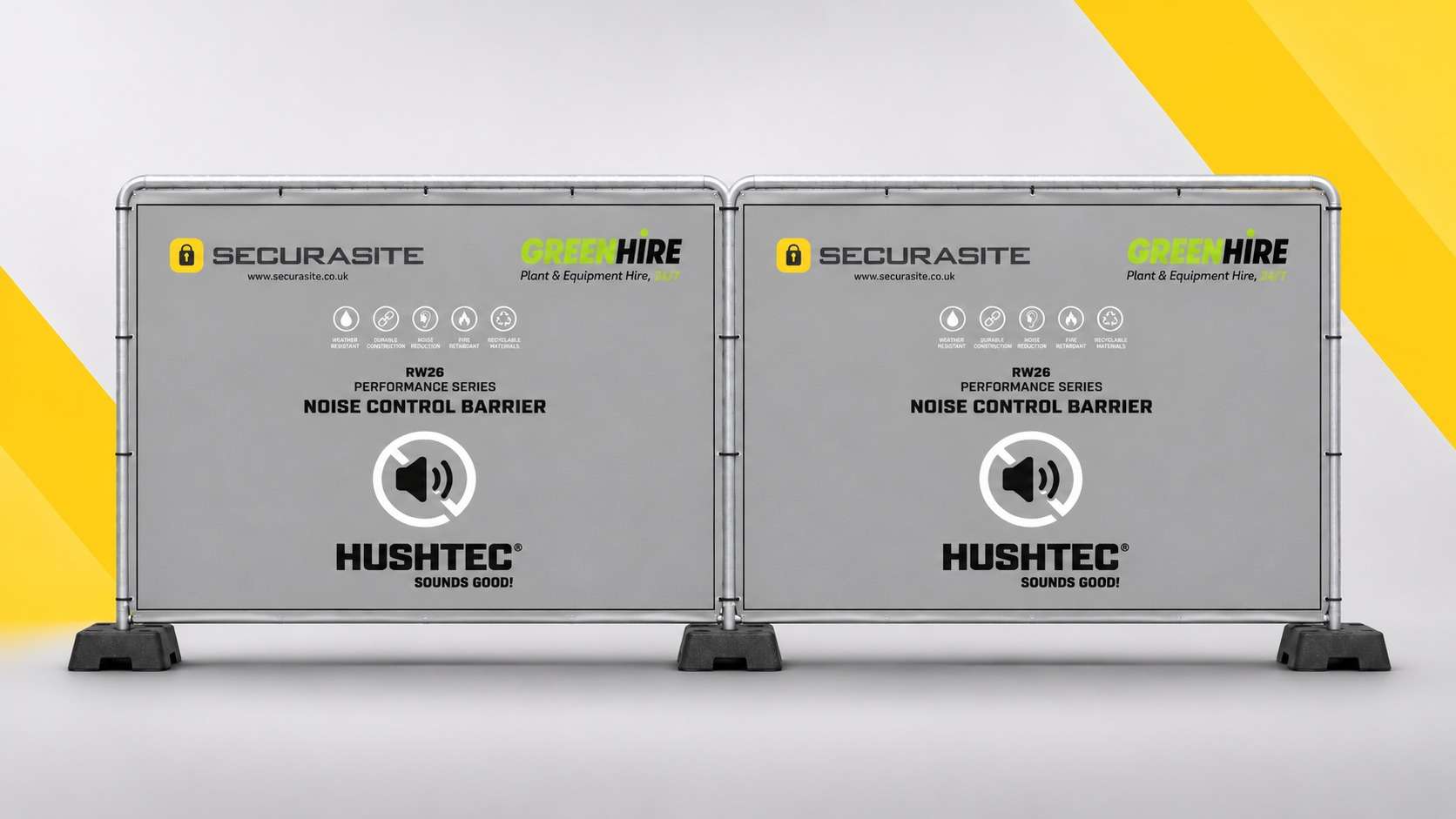
Acoustic Barriers for Construction Sites: A UK Guide to Ratings, Rules and Choosing the Right System
Acoustic barrier guide · Updated 17 November 2026
Acoustic Barriers for Construction Sites: A UK Guide to Ratings, Rules and Choosing the Right System
Noise is one of the quickest ways for a construction project to fall out with its neighbours and its council. This guide shows how acoustic barriers work, what the ratings mean, which UK rules apply, and how to choose, plan and fit the right HUSHTEC system.
How an acoustic barrier cuts noise
Sound travels from a breaker, saw or generator in a straight line until something stops it. An acoustic barrier blocks it with a dense core and soaks it up with an absorbent face, but most of what still reaches a neighbour goes over the top or round the ends.
1
Block
The dense core stops airborne sound passing through. This is what the Rw rating measures.
2
Absorb
The face absorbs sound that hits it, so less bounces back into the site. This is what NRC measures.
3
Hide the source
Position and height decide how much sound bends over the top. Gaps at joins, the base and the ends let it straight through.
Try it
Barrier position simulator
Move the barrier and change the heights to see when it hides the noise source from the neighbours.
Noise source
Neighbour
Barrier position
Barrier height
10dBestimated screening
Source hiddenView the Performance 3.6m panel →
A rule of thumb based on the BS 5228 screening guide (about 10dB when the source is hidden, about 5dB when it is just visible). It is not a noise assessment.
Reading the ratings
Acoustic barrier datasheets use several numbers, and they are not interchangeable. Tap a rating to see what it means and how to use it.
Weighted sound reduction index
A single laboratory number for how much airborne sound a panel stops, rated to BS EN ISO 717-1. It is the figure to compare barriers on in the UK. Higher is better.
HUSHTEC Performance 1.3m: Rw23HUSHTEC Performance 3.6m: Rw26Sound transmission class
The American equivalent of Rw, calculated in a similar way (ASTM E413). Close to Rw for the same panel, but compare STC with STC.
HUSHTEC RapidWall: STC32Performance 1.3m: STC23Noise reduction coefficient
How much sound the face absorbs, from 0 (reflects it all) to 1 (absorbs it all). It matters where noise would bounce back into the site or between buildings.
Performance 1.3m: NRC 0.9RapidWall: NRC 0.9Headline "up to" figures
Usually the best result at one high frequency, not a weighted rating. They cannot be compared with Rw and rarely reflect the low rumble of engines and plant. Ask for the Rw, or a one-third octave table, before you buy.
Compare like with likeWhat a reduction sounds like
3dBJust noticeable
5dBClearly noticeable
10dBAbout half as loud
The HUSHTEC Performance 1.3m panel also has a published one-third octave table from 50Hz to 5000Hz on its product page, which a noise consultant can use to model it. Like every barrier, it performs better against saws and breakers than against diesel engines. A lower rated panel fitted well will beat a higher rated panel fitted badly.
UK construction noise rules
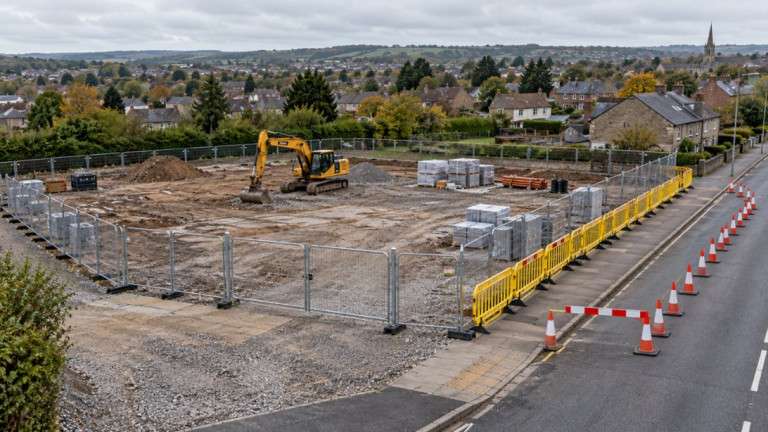
There is no single national noise limit for construction sites. Councils control site noise with the Control of Pollution Act 1974, guided by the BS 5228 code of practice. This is how the rules play out across a project.
- Before work starts
Section 61 prior consent
Apply to the council with your methods, hours and noise controls. The council has 28 days to decide, and working within a consent protects you against a Section 60 notice. List the barrier products, their Rw ratings, position and height in your noise management plan.
- Planning the site
BS 5228-1 and Best Practicable Means
BS 5228-1 sets out how to predict construction noise and choose controls. Councils expect Best Practicable Means: quieter plant, sensible hours and screening. Acoustic barriers are a recognised measure.
- Every working day
Working hours
Many councils allow noisy work 8am to 6pm Monday to Friday and 8am to 1pm on Saturday, with none on Sundays or bank holidays. Check your own council and planning conditions.
- Your own workers
Control of Noise at Work Regulations 2005
Action is required at a daily exposure of 80dB(A), hearing protection at 85dB(A), and exposure must not exceed 87dB(A). The absorbent face of a barrier also cuts noise reflected back into the site.
- If neighbours complain
Section 60 notice
The council can serve a notice setting how the work is carried out: hours, plant and noise levels. Breaching it is an offence, so it pays to have controls in place first.
The HUSHTEC acoustic range
We supply four HUSHTEC systems for four different jobs: two panels for fence lines, a freestanding wall and an enclosure for a single machine.
 Long boundaries
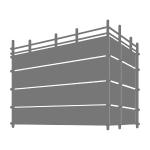
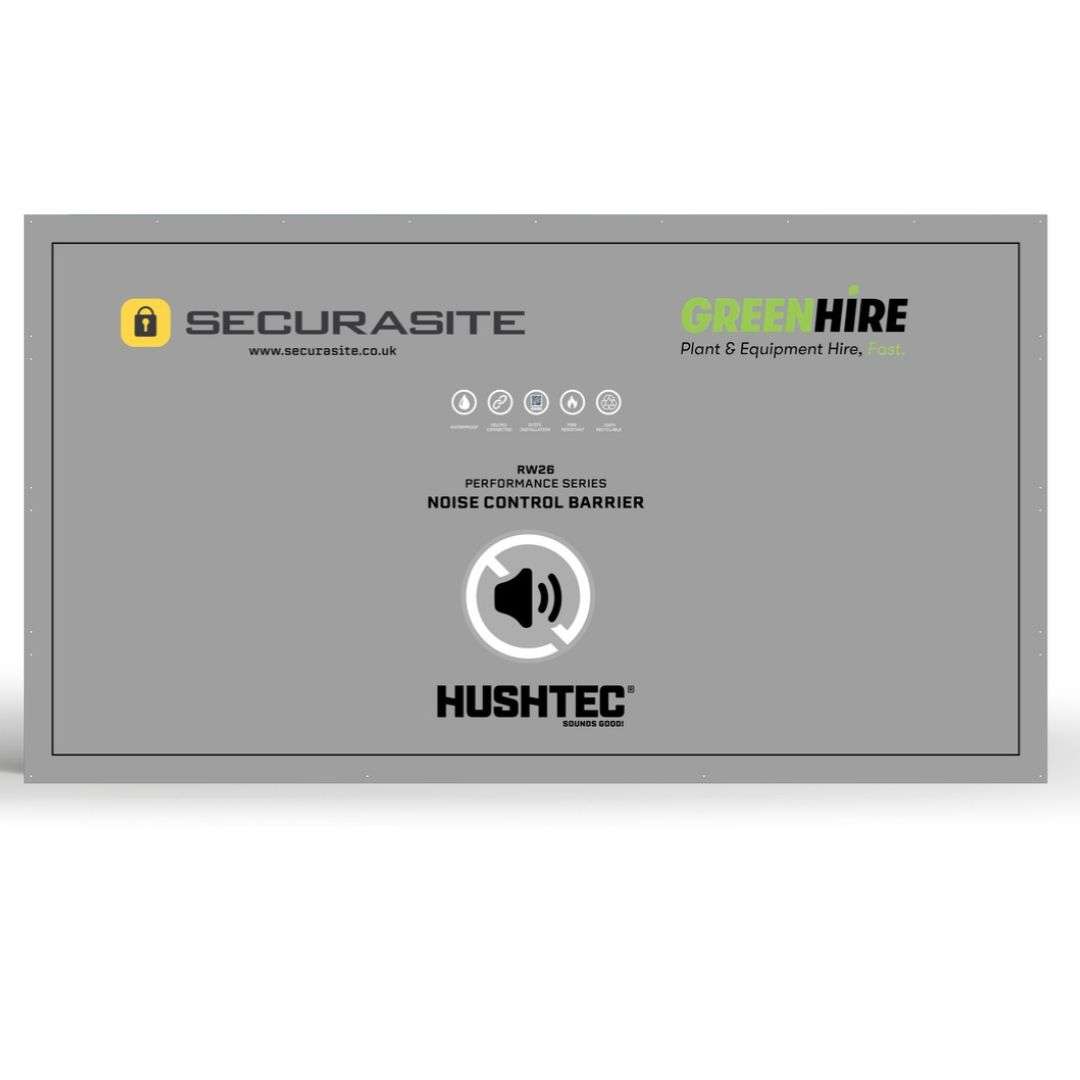
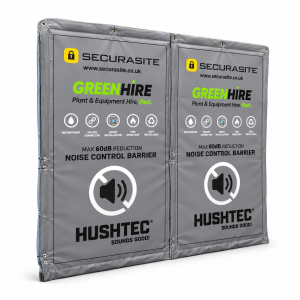
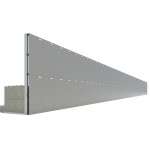
HUSHTEC Performance 3.6m x 2m
Rw263.6m x 2mVelcro joinsTensioned eyelets
Covers about one 3450mm temporary fence panel per barrier, so long runs need fewer barriers and have fewer joins for noise to leak through.
 Corners and gaps
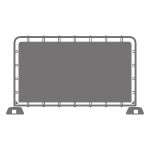
HUSHTEC Performance 1.3m x 2m
Rw23STC23NRC 0.9Octave data published
Narrow panels for corners, gates, returns and close screening of small plant. The most detailed published data in the range.
 Tall plant
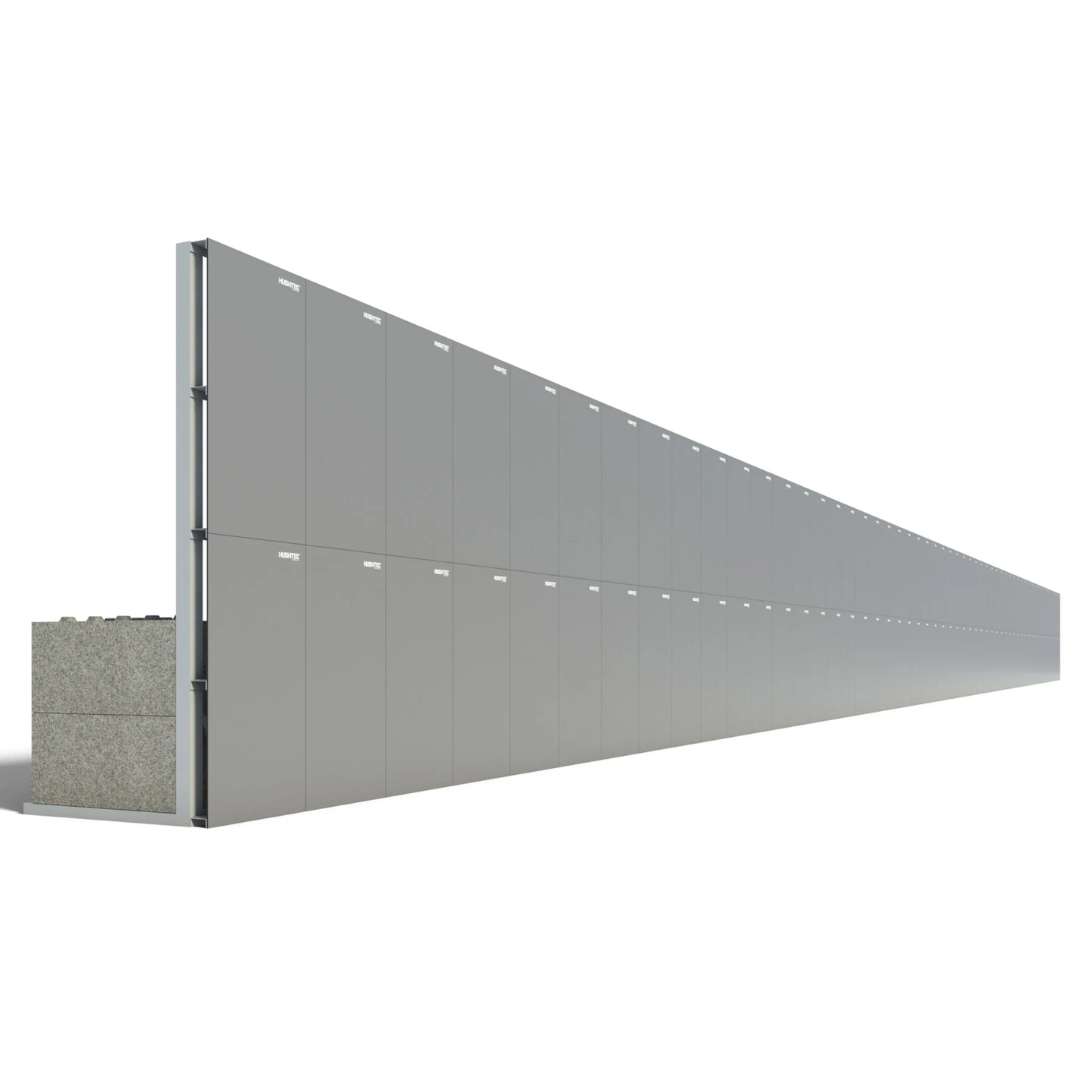
HUSHTEC Acoustic RapidWall
2m to 8m highSTC32NRC 0.9Wind certified to 31 m/s
A freestanding modular wall with no digging or ground anchors, for plant taller than a fence line. Set out in U, L, perimeter or corridor layouts.
 One machine
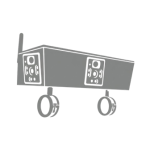
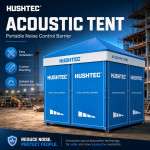
HUSHTEC Noise Control Mobile Tent
Rw26 walling3 sizes2.2m highOn castors
Encloses a saw bench, compressor or generator on all sides and overhead, and rolls with the work during the shift.
| System | Type | Size | Rating | Best job on site |
|---|---|---|---|---|
| Performance 3.6m | Fence-mounted panel | 3.6m x 2m | Rw26 | Long boundaries and street frontages |
| Performance 1.3m | Fence-mounted panel | 1.3m x 2m | Rw23, NRC 0.9 | Corners, gates and small plant |
| RapidWall | Freestanding wall | 2m to 8m high | STC32, NRC 0.9 | Piling, crushing and tall plant |
| Mobile Tent | Wheeled enclosure | 2.5m wide, up to 5.2m long | Rw26 walling | One noisy machine, moved during the shift |
Plan your barrier run
Enter the length of your barrier line to estimate the barriers, temporary fencing and fixings you need, at our current online prices exc. VAT.
Barrier panelTemporary fencingStabilisers
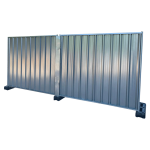
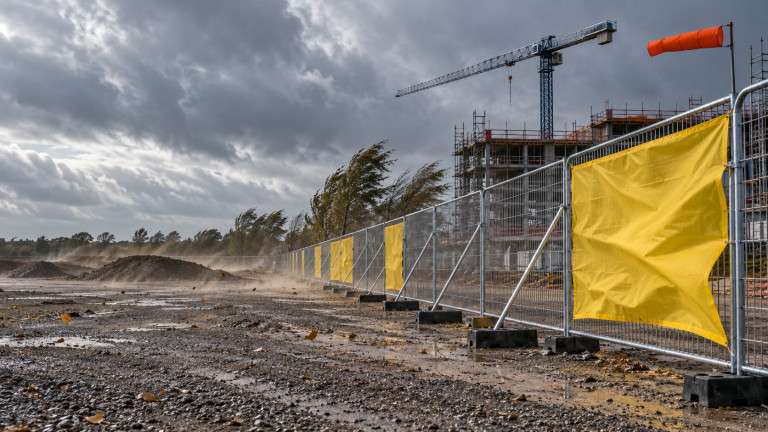
Sheeted fencing catches the wind. Check your postcode with the Wind Load Calculator.
Estimated total£0.00exc. VAT and delivery
0Barriers
0Fence panels
0Joins to seal
- Your parts list will appear here. If it does not, call 0330 056 4420.
Based on a straight run of Round Top fence panels (3450mm), a fence foot at every joint and both ends, a coupler at every joint, and each stabiliser with a pin and a 20kg ballast block. Corners, gates and exposed sites may need more.
Fitting a run and keeping it standing
Fit the barrier run in this order and the fence line stays secure while the barrier line stays sealed.
- 1
Plan the line
Between the source and the neighbours, close to one or the other.
- 2
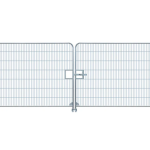
Erect the fence
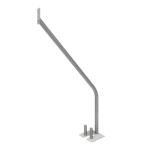
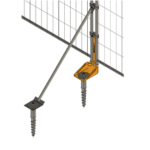
Feet at every joint, couplers tight, stabilisers and ballast on.
- 3
Face the source
Face the side marked for the noise source towards it.
- 4
Fix the eyelets
Fix each barrier taut through its tensioned eyelets.
- 5
Seal the joins
Join barriers along their Velcro edges. Fill gaps with 1.3m panels.
- 6
Inspect daily
Walk the line daily and after high winds. Refit anything loose.
Wind loading
A sheeted fence behaves like a sail
- Treat a sheeted fence run as temporary works, approved by your temporary works co-ordinator on larger or exposed sites
- Fit stabilisers and ballast before the barriers go on, not after the first windy night
- Inspect after storms, and lower or remove barriers if the line cannot be made secure
- For screens taller than 2m, RapidWall is certified for wind speeds up to 31 m/s at heights up to 8m
The calculator is a beta tool that gives estimates only.


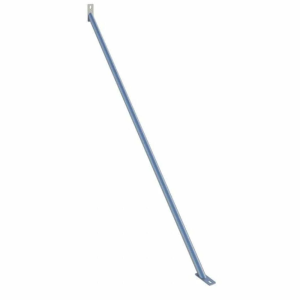
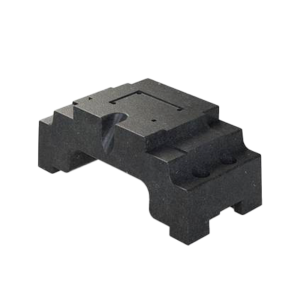
For more on fence panels, feet and couplers, see our temporary fencing panels guide.
Buy or hire, and the mistakes to avoid
Buy
Own your barriers
- All four HUSHTEC systems are sold outright
- Suits contractors who move barriers from job to job, or projects longer than a few months
- Panels can be made in custom sizes and colours, and printed with your own branding
Hire
Hire for a project
- Hire enquiries may be considered where the minimum hire period is 12 weeks
- Hire is arranged through our sales team only
Six mistakes we see on site
Leaving gapsSeal every Velcro join and close the base and ends.
Wrong positionPut the barrier close to the source or close to the neighbours.
Comparing "up to" figuresCompare Rw with Rw, not single-frequency peaks.
Forgetting the windFit extra stabilisers and ballast before the barriers.
2m barrier, tall plantUse RapidWall or enclose the source instead.
Back to frontFace the side marked for the noise source towards the noise.
Frequently asked questions
For most fence lines, the HUSHTEC Performance 3.6m x 2m panel (Rw26) gives the best balance of rating, coverage and cost, with the 1.3m panel for corners and short gaps. For tall plant, use RapidWall. To silence one machine, use the Mobile Tent.
As a rule of thumb from BS 5228, a barrier that completely hides the noise source from the listener reduces noise by about 10dB, which sounds roughly half as loud. If the top of the source is still just visible, expect around 5dB. Gaps, height and distance all change the result.
Rw is the weighted sound reduction index, a laboratory rating of how much airborne sound a panel stops, weighted into a single number. It is the best figure for comparing barriers. Higher is better.
Yes. HUSHTEC Performance panels fix through their tensioned eyelets to standard temporary fence panels, as well as scaffold and hoarding. Add stabilisers and ballast, because a sheeted fence catches far more wind than mesh.
Many councils allow noisy work from 8am to 6pm Monday to Friday and from 8am to 1pm on Saturday, with no noisy work on Sundays or bank holidays. Hours vary by council and by planning condition, so always check locally.
A Section 61 consent is prior approval from your local council, under the Control of Pollution Act 1974, for how you will carry out construction work and control noise. The council has 28 days to decide, and working within a consent protects you against a Section 60 notice.
Usually, yes. A solid barrier turns a mesh fence into a sail, so the fence line needs more stabilisers and ballast. Use our Wind Load Calculator as a guide and follow your temporary works design.
A barrier screens noise in one direction, usually along a fence line. An enclosure, like the HUSHTEC Mobile Tent, surrounds the noise source on all sides and overhead, so it controls noise at source.
Hire enquiries may be considered where the minimum hire period is 12 weeks. Hire is arranged through our sales team only.
Planning a noise control set-up?
Send us your site plan, the length of the barrier line and the main noise sources. Our team will recommend the right HUSHTEC system and confirm the fencing, stabilisers and ballast.
Related posts
Nexus Barrier System: A UK Guide to Water Filled Barriers, Panels and Couplers By the Securasite team.... Continue reading
A site storage box is a lockable steel box that keeps tools and equipment in one place... Continue reading

A practical UK buyer's guide to expanding concertina barriers. Learn how the Securasite Spanguard works, which of... Continue reading

A practical comparison of Securasite's temporary fencing range, Round Top, Low-Level, Extra Tall and Half Size, covering... Continue reading

A practical comparison of Securasite's pedestrian barrier range, Standard, HD, Hybrid, Hawk and Infinity, covering connectors, insert... Continue reading






Add comment