No products in the basket.
Return To Shop






What Is a Pedestrian Barrier?
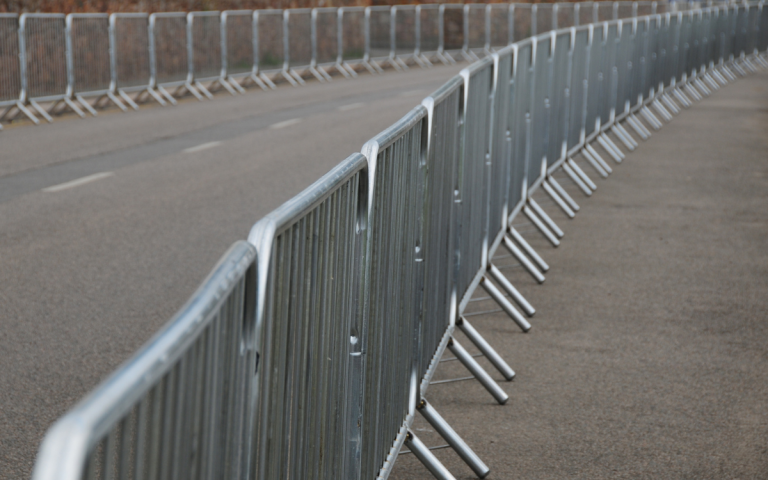
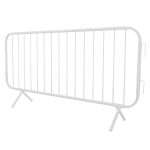
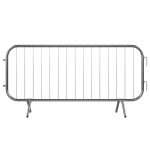
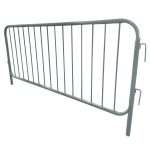
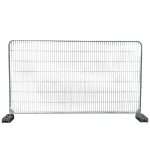
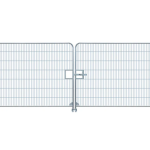
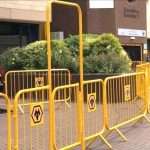
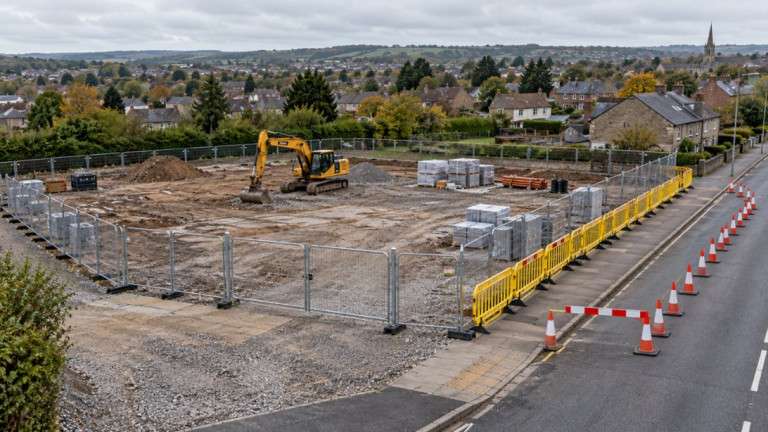
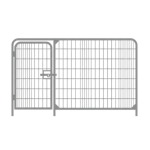
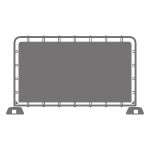
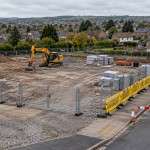
A pedestrian barrier is a freestanding steel panel, 2300mm long and 1100mm high, that connects to the next barrier to form a continuous line. It marks out where people can and cannot walk: around plant and excavations, along footpaths next to live works, and at queues and events. It is a visual and physical guide, not a vehicle restraint system.
How to Choose the Right Pedestrian Barrier
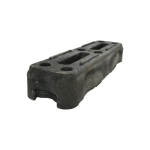
All of our steel pedestrian barriers share the same 2300mm x 1100mm size, so different models line up in a run. What changes is the infill, the connectors and the feet, which decide how a barrier copes with knocks, wind and repeated handling.
| Barrier | Infill | Connectors | Feet | Weight | Suits |
|---|---|---|---|---|---|
| Standard pedestrian barrier | 5mm wire | Wrap-around | Rigid feet, 460mm | 9kg | Construction and civil sites where cost per metre matters |
| HD pedestrian barrier | 12mm inserts, fully welded | Hook and eye | Balled feet, 460mm | 11kg | Busy sites, public events and hire fleets |
| Hybrid barrier | 5mm wire | Hook and eye | 460mm | 9kg | Light weight with hook and eye connection |
| Infinity barrier | 15 upright tubes, no welded bottom rail | See product page | 2 scalloped feet, 390mm | 12kg | Fewer weld points along the bottom of the frame |
| Hawk barrier | Fully welded tube | Interlocking | Loose feet with flat anti-trip footing (sold separately) | 9kg | Routes where a low, flat foot reduces trip risk |
Not sure which suits your site? Our pedestrian barrier comparison guide goes through each model in detail.
Colour Coding Barriers on Site
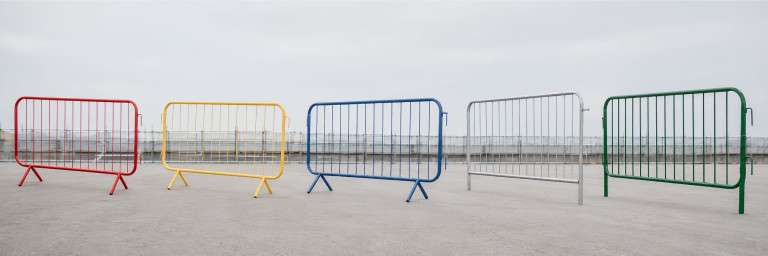
Colour tells operatives what a barrier line is protecting. Your client or site rules take priority, but these are the most common uses on UK sites:
| Colour | Where it is commonly used |
|---|---|
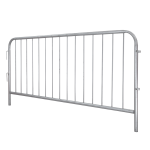
| Galvanised | General segregation on construction and civil sites. The cost-effective choice for large runs. |
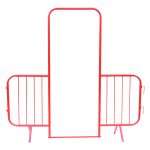
| Red | Exclusion zones, plant boundaries and hazard demarcation. |
| White | Safe pedestrian routes and walkways, often alternated with red. Indoor and public-facing areas. |
| Yellow | Electrical works, coded warning zones, warehouses and industrial units. |
| Blue | Groundworks, water mains, utilities and other below-ground works. |
| Green | Ecological areas, welfare boundaries, low-risk zones and outdoor events. |
| Orange | High-visibility general demarcation, busy public areas and traffic management. |
| Black | Corporate events, branded installs and low-profile environments. |
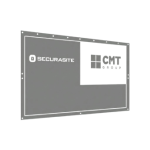
Every colour except galvanised is powder coated in our own factory, and we can match any RAL number for company colours. Metal name plates (135x100mm, 270x110mm or 420x420mm) and laminated branded stickers put your name or a safety message on each panel.
How Many Barriers Do I Need?
Divide the length of the run in metres by 2.3 and round up. A 50m run needs 22 barriers and a 100m run needs 44. Add one or two spares for corners and damage, and put a walkthrough barrier wherever people need to cross the line.
Storage, Delivery and Hire
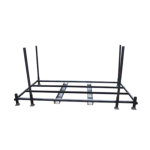
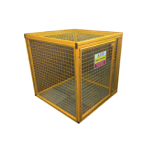
- Storage: our pedestrian barrier stillages stack and move by forklift, which keeps barriers tidy in the yard and quick to load.
- Delivery: stocked items ordered online before 2pm are dispatched within 1 to 2 working days. Made-to-order items take 1 to 3 working days. Bespoke RAL colours take 2 to 4 working weeks. Delivery is free on orders over £1,500 exc. VAT in England and Wales.
- Hire: we hire barriers on a mid to long-term basis. Request a quote with the quantity, location and hire period.